ELYSIUM LAB
From first wireframe to Blockstream acquisition, designing a keyless Bitcoin wallet.
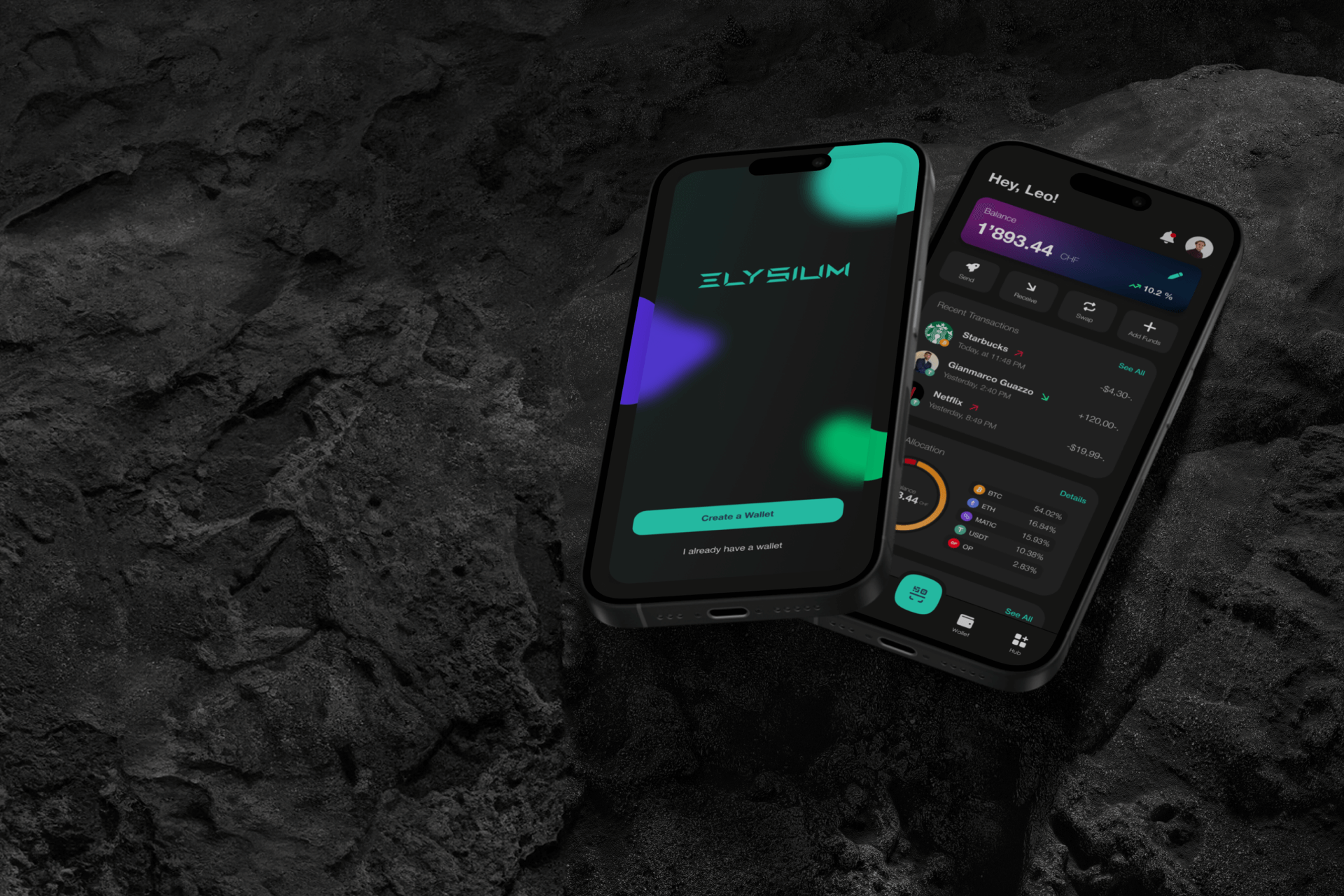
Elysium Wallet was a non-custodial Bitcoin wallet built around a radical premise: self-custody without seed phrases. No stored keys, no recovery phrases to lose, just a secure, intention-driven interface for managing Bitcoin, Lightning, Liquid assets, and stablecoins.
In July 2025, Elysium Lab was acquired by Blockstream, one of the foundational companies in Bitcoin, founded by Adam Back. The acquisition included Elysium's technology, team, and patent-pending keyless authentication framework, and marked the launch of Blockstream's European headquarters in Lugano, Switzerland.
I was the lead designer from day one, owning the full interaction and UX/UI design end-to-end across 12+ months of agile sprints, from initial research through App Store and Play Store launch, and into the Blockstream transition.
My Role
UX/UI Design, Interaction & Prototyping
Project Time:
12 months+ (Agile sprints, MVP launched Q4 ’24)
Platform:
iOS & Android (App Store & Play Store)
The Problem
Self-custody wallets are powerful, but complex, intimidating, and risky for average users. Seed phrases get lost. Interfaces assume deep crypto knowledge.
Context →
Complexity Gap
Most self-custody wallets are built by crypto-native teams for crypto-native users. The gap between "technically secure" and "actually usable" keeps mainstream adoption stuck.
Broken Trust
High-profile collapses like FTX drove demand for self-custody, but the available tools weren't ready for the influx of less technical users.
Seed-Phrase Vulnerability
Seed phrases are the industry standard for key recovery, and also its biggest single point of failure. Billions are lost annually to forgotten, stolen, or mishandled phrases.
Onboarding Friction
No existing wallet combined truly keyless custody with intuitive onboarding. The market needed a wallet that removed the barrier entirely, not just simplified it.
Discovery & Research
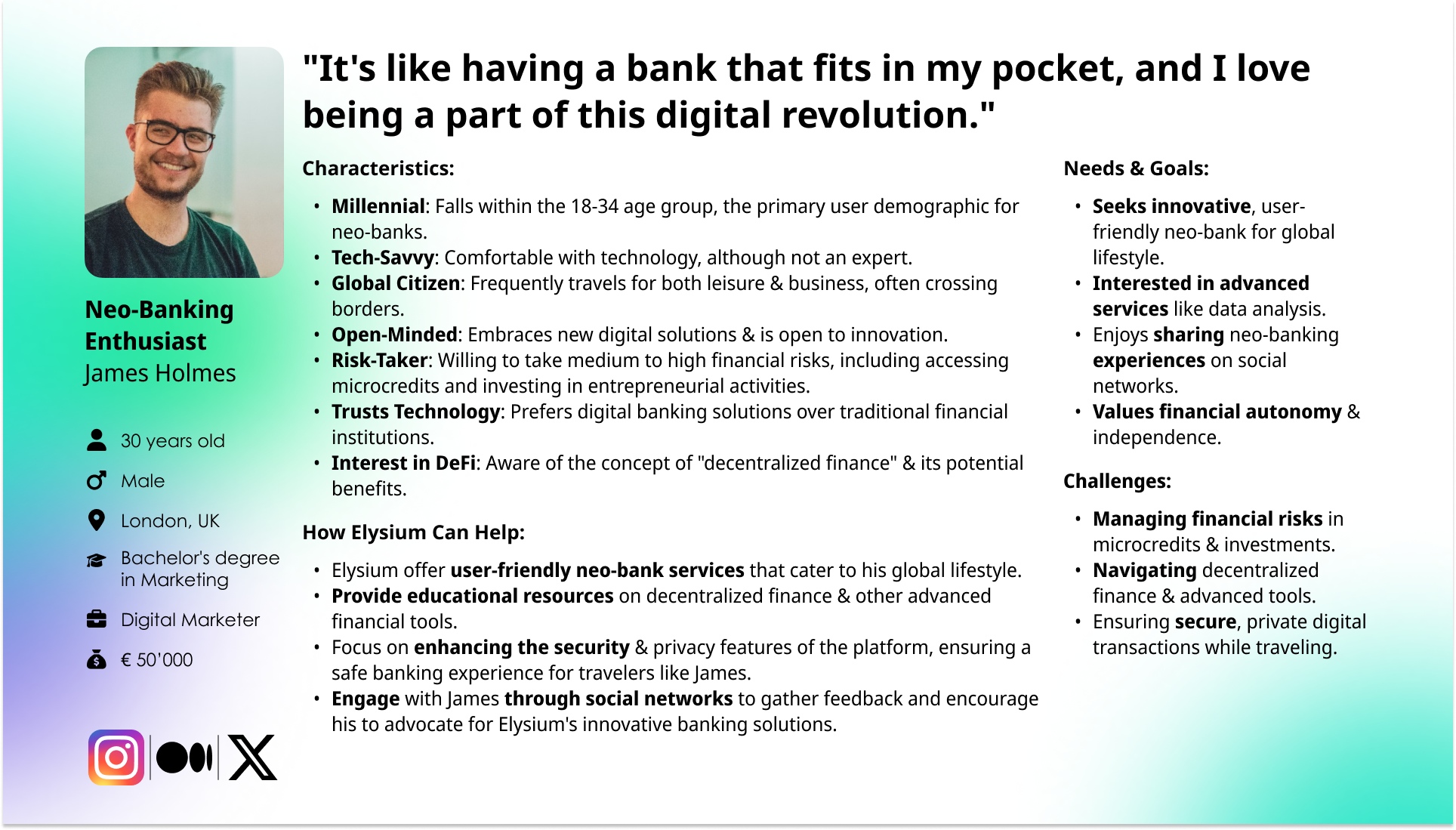
To ground our design in real user needs, we developed three distinct personas, each representing a key segment of our audience:
- → Crypto Power User
→ Fintech & Neo-Banking Investor
→ Mass Digital-Payments User
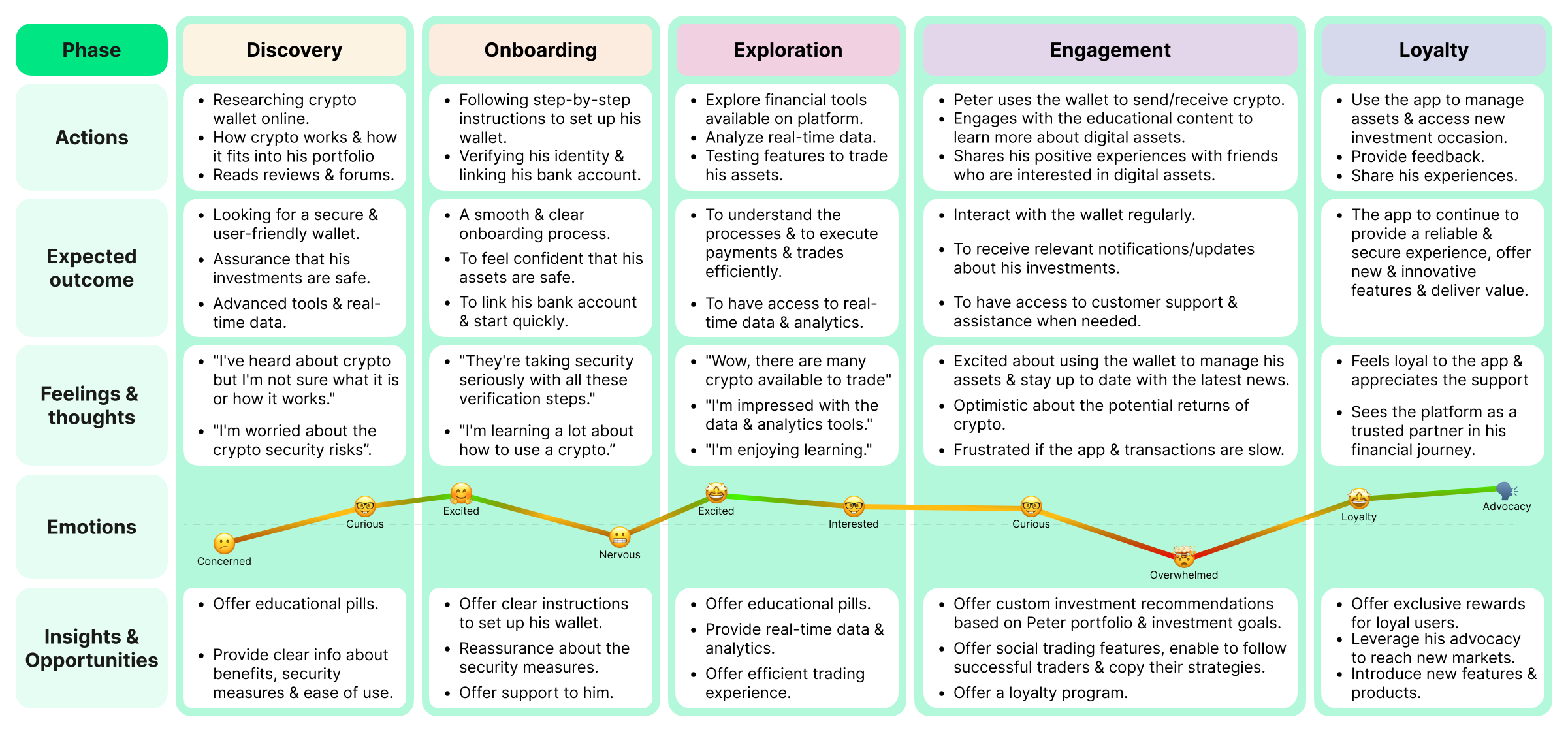
For each persona, we then mapped an end-to-end user journey across the phases of Discovery, Onboarding, Engagement, and Loyalty. This dual-artifact approach ensured we captured both the “who” (their goals, frustrations, and motivations) and the “how” (the steps they take and where they encounter opportunities).
Below, we’ll spotlight one persona and its journey to illustrate how these insights directly informed our UX decisions.
User Persona
User Journey
Information Architecture
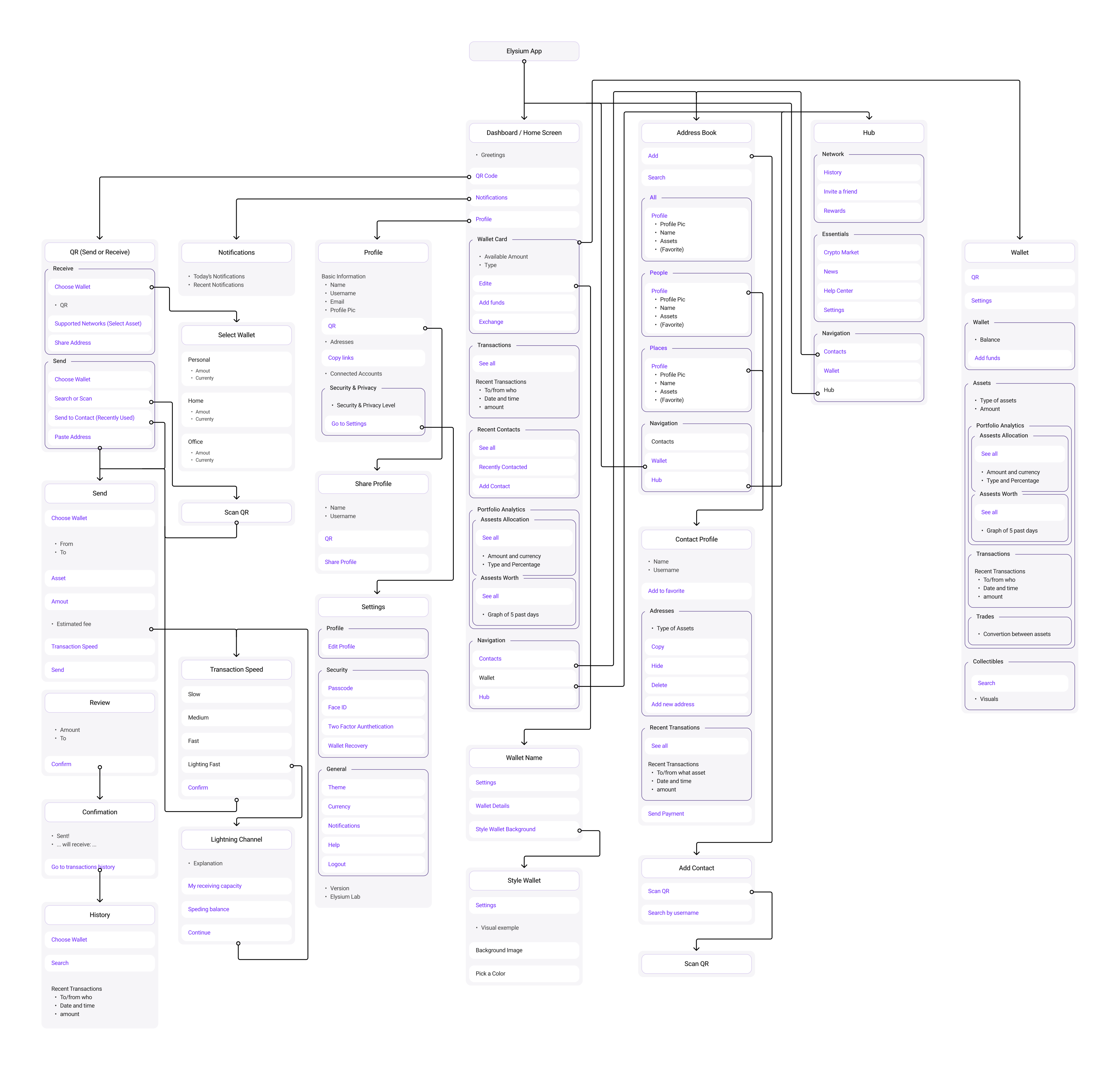
Elysium Wallet had to support multiple asset types, customizable security settings, and ecosystem tools—without overwhelming users. I mapped every possible user flow, from onboarding to recovery to asset management. The IA prioritized:
→ Progressive disclosure: only showing complexity when needed
→ Logical groupings for navigation (Assets / Activity / Security / Services)
→ Clear call-to-actions to drive confidence and reduce friction

Wireframing
We crafted low-fidelity, grayscale wireframes, stripped of branding and optimized for annotations on behavior, microcopy, and validation for two critical paths: onboarding and the send-transaction flow.
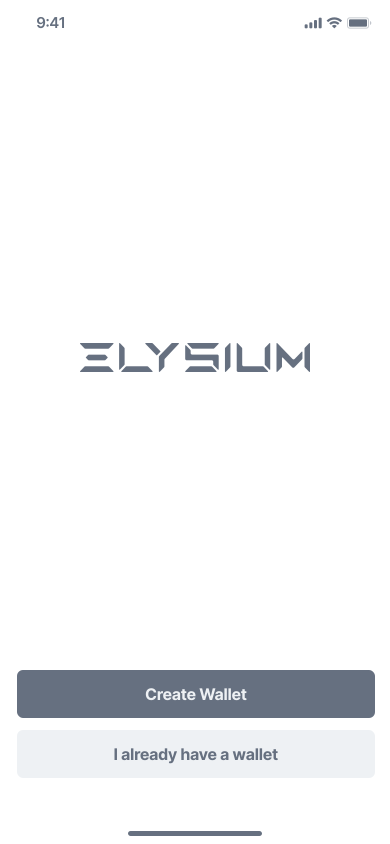
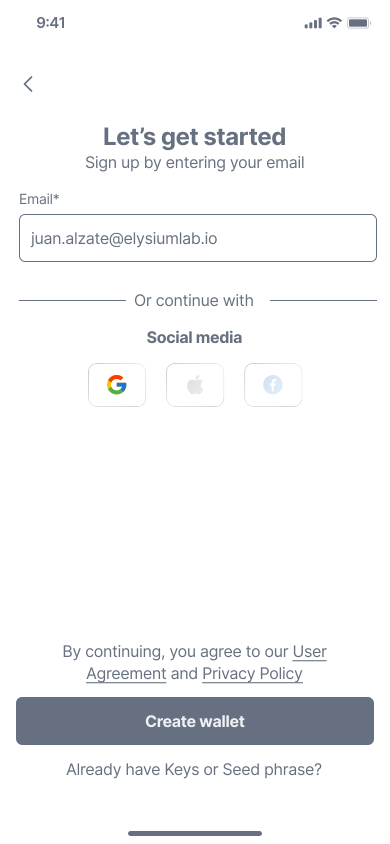
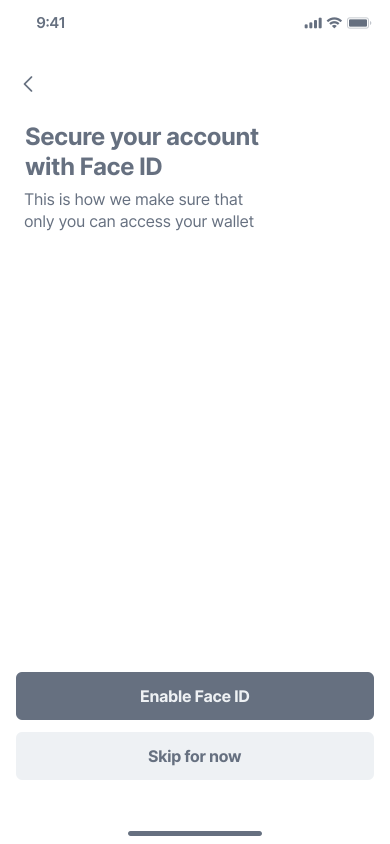
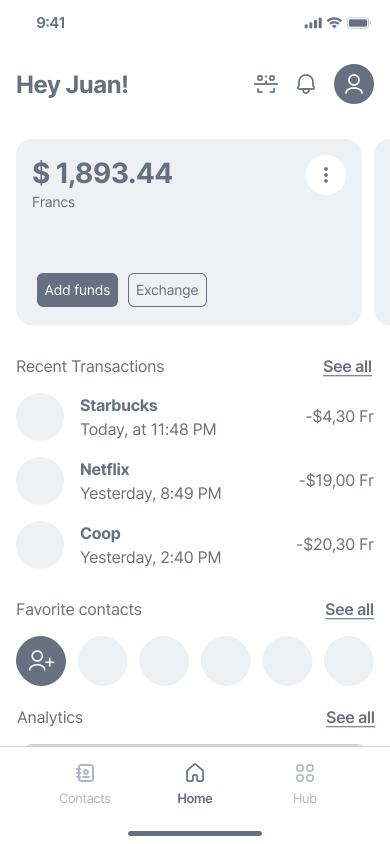
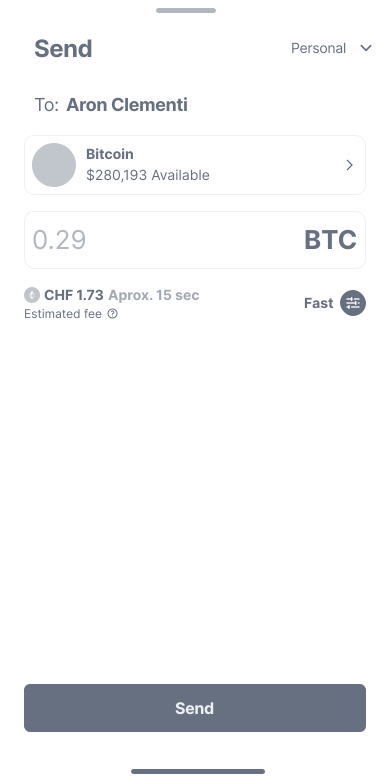
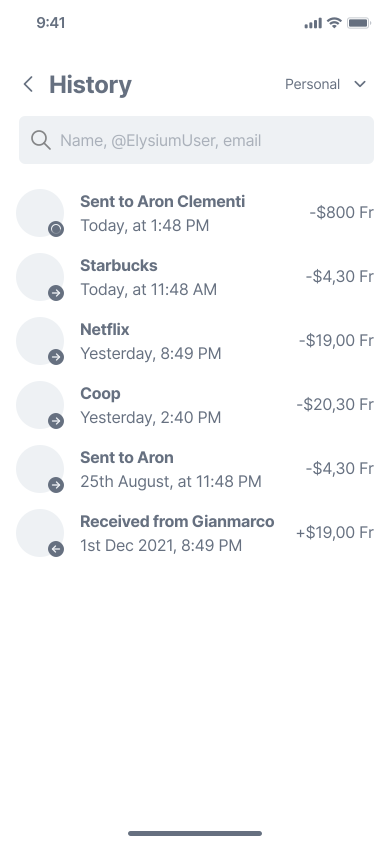
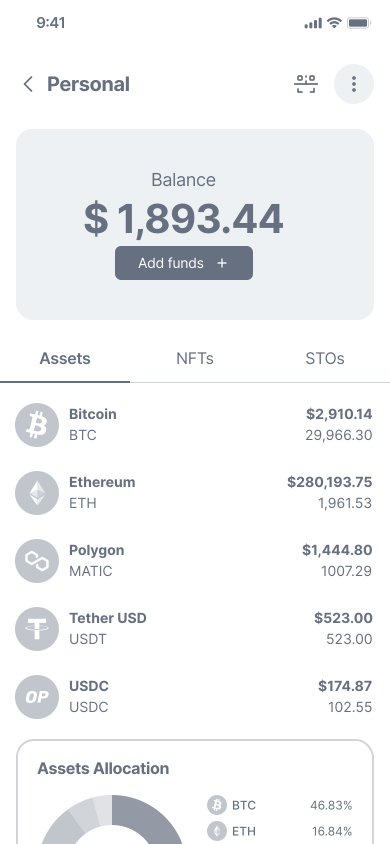
These annotated, grayscale wireframes gave us a clear, shareable blueprint—perfect for rapid stakeholder review and user testing before layering on our design system.
Design System & High-Fidelity Prototype
To bridge our foundational styles with a working app experience, we combined our atomic-level design tokens and component library into a fully interactive, mobile-first prototype.
→ Color Tokens: Defined as CSS/SwiftUI variables (--color-primary-500, --surface-dark-200, etc.) to drive both light and dark modes. Contrast ratios meet WCAG AAA at every level.only showing complexity when needed.
→ Typography Tokens: Scalable rem-based values (e.g. --font-h2-size: 2.25rem; --line-height-h2: 2.5rem) ensure consistent vertical rhythm and modular scale.
→ Spacing & Layout: 4-point base grid, exposed as tokens (--spacing-xs to --spacing-xl) to enforce consistency in paddings, margins, and touch targets (min. 44 × 44 pt).
→ Elevation & Surfaces: Z-axis tokens (--elevation-level-1 … --elevation-level-4) translate to dynamic shadows and opacity layers for card, modal, and overlay components.
Bringing it all together
Elysium Lab Wallet is built around three core touchpoints, Onboarding & Recovery, Wallet Management and Transactions, all delivered via our iOS and Android apps.
The mobile app enables frictionless keyless onboarding, customizable wallet views and address book, scan-to-send transactions and real-time market analytics with custom alerts. Learn more.